
Views: 6 Author: Site Editor Publish Time: 2025-10-09 Origin: Site


Why does modern manufacturing rely heavily on laser welding machines? These machines revolutionize precision and efficiency, offering unmatched versatility. Laser welding machines are essential tools, providing high-speed, quality welds for various materials. In this post, you'll learn about their importance in manufacturing and the growing market trends driving their popularity.
Laser welding machines come in various types, each designed for specific applications and offering unique advantages. Understanding these types helps you select the best machine for your needs.
Fiber laser welding machines use optical fibers to deliver the laser beam. They are known for:
High efficiency and precision
Long-distance laser transmission
Versatility across many metal types
These machines come in handheld and automated platform versions. Handheld models offer flexibility for complex or irregular shapes. Automated platforms boost productivity, ideal for batch production.
This type uses extremely short laser pulses measured in nanoseconds. It’s perfect for:
Micro-welding tasks
High-precision applications
Common in electronics, medical devices, and precision instruments, it ensures minimal heat damage and fine weld control.
QCW stands for quasi-continuous wave. These machines provide:
High peak power output
Deep penetration welding
High melting rates
They’re great for applications needing strong welds, such as heavy-duty manufacturing or structural components.
YAG (Yttrium Aluminum Garnet) machines use solid-state lasers and excel at:
Welding thicker materials
Heavy industry applications
Though less efficient than fiber lasers, YAG welders remain reliable for tough jobs requiring robust welds.
Tip: Choosing the right laser welding machine depends on your material type, thickness, and production scale; fiber lasers suit precision and speed, while YAG lasers handle heavier work.
Handheld laser welding machines have become popular tools in manufacturing and repair industries. They offer several benefits that traditional welding methods or larger automated systems cannot match.
The laser beam is precisely controlled, producing narrow weld seams and deep penetration. This control ensures strong joints and uniform heat distribution. It minimizes damage to surrounding material, reducing thermal stress and deformation. As a result, the original properties of the workpiece remain intact.
Laser welding melts materials quickly due to its high energy density. This speed shortens heat application time, lowering risks of warping and distortion. It also improves overall efficiency, letting operators complete jobs faster than traditional welding methods.
Handheld welders offer flexible laser head control and adjustable focus. They can reach tight spaces, inner corners, and complex angles easily. This adaptability suits irregular or intricately shaped workpieces, making them ideal for repair work or custom fabrication.
Energy output remains stable during operation, creating smooth, aesthetically pleasing weld seams. Most parts require little to no post-processing like de-burring or polishing, saving time and labor costs. The cleanliness of welds also reduces contamination risks.
Intuitive interfaces let users select pre-configured settings for different materials quickly. Even beginners can learn to operate handheld laser welders efficiently. This ease of use reduces training time and increases accessibility compared to traditional welding methods.
The 3-in-1 handheld laser welding machine combines welding, cleaning, and cutting functions into a single compact device. This multifunctional tool saves space and boosts productivity by handling multiple tasks without switching machines.
Laser Welding: Delivers clean, strong welds on metals like stainless steel, aluminum alloys, and copper. Ideal for thin-walled parts.
Laser Cleaning: Removes rust, oil, and oxidation without chemicals or damage to the base metal.
Laser Cutting: Cuts metal sheets up to 3mm thick, suitable for auxiliary cutting tasks.
Its handheld design offers flexibility for welding complex or hard-to-reach parts. The smart control system automatically adjusts laser power and speed, ensuring consistent quality. Plus, it’s eco-friendly, producing no harmful gases or smoke.
This lightweight, 700W air-cooled portable laser welder weighs about 25 kg, making it highly portable and easy to operate in tight or remote spaces. Its compact design saves workshop space and reduces operator fatigue during long shifts.
High Welding Efficiency: Increases speed by over three times compared to traditional TIG welding.
Consumable-Free Operation: Most welds require no filler wire, but an automatic wire feeder can be added if needed.
Smooth Welds: Produces neat seams needing minimal post-weld polishing.
It’s widely used in sheet metal fabrication, kitchen cabinets, handrails, and stainless steel products. Its simple operation suits beginners and professionals alike.
The precision platform laser welding machine offers superior accuracy and automation for high-volume production. It features multi-axis servo tables for complex part positioning and supports various welding modes such as spot, seam, and butt welding.
Ultra-Fine Laser Spot: Controls laser focus down to tens of microns.
Real-Time Monitoring: Uses CCD cameras and industrial PC for process control.
Robotic Integration: Compatible with multi-axis robots for automated welding.
This system excels at welding ultra-thin materials under 0.1mm and ensures consistent, high-quality welds with minimal waste. It’s ideal for industries demanding precision and repeatability.
When choosing the best laser welding machine, understanding the factors influencing its price helps you make a smart investment. Several key elements affect cost, reflecting the machine’s capabilities, quality, and suitability for your needs.
Power output is a major price driver. Higher wattage machines weld faster and handle thicker materials. For example, a 1000W laser welder suits thin metals, while 6000W or more tackles heavy-duty tasks. More power means advanced components and cooling systems, increasing the price. Choose power based on material thickness and production speed requirements.
Well-known brands often charge more due to proven reliability, better support, and advanced technology. Trusted manufacturers invest in quality control and innovation, which reduces downtime and maintenance costs. While cheaper brands may save upfront costs, consider long-term value and after-sales service when budgeting.
Laser source technology impacts price significantly:
Fiber Lasers: Offer high precision, efficiency, and long life but cost more upfront.
YAG Lasers: Less expensive but less efficient and suited for thicker materials.
Diode Lasers: Usually lower cost but limited in power and precision.
Fiber lasers dominate modern welding due to their superior performance, justifying their higher price for many applications.
Automation features affect cost:
Manual or handheld welders are more affordable but require skilled operators.
Semi-automatic machines add features like auto wire feeding or positioning.
Fully automated systems with robotic integration cost more but boost throughput and consistency.
Higher automation reduces labor costs but raises initial investment.
Custom machines tailored for specific tasks, shapes, or materials add to the price. Special fixtures, unique software, or multiple laser heads increase complexity and cost. Customization ensures better fit for your process but requires careful cost-benefit analysis.
Advanced control systems raise prices but improve welding quality and ease of use. Features like:
PLC or CNC controllers
Real-time monitoring
Intelligent sensors
Path planning software
These technologies optimize weld parameters, reduce errors, and enhance repeatability. Investing in smart controls often saves money by reducing scrap and rework.
Tip: Assess your production needs carefully—balancing power, automation, and technology helps you select a laser welding machine that delivers the best value for your budget.
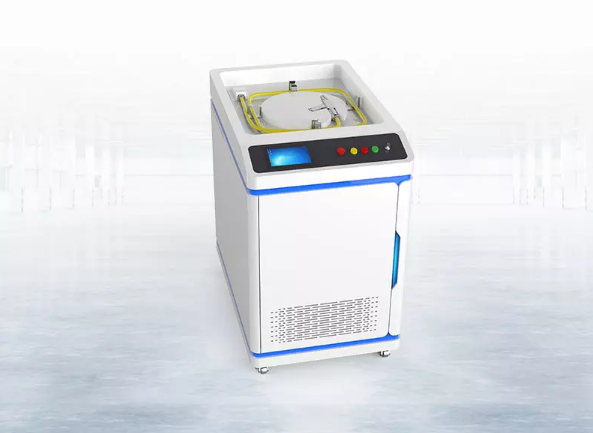
Laser welding machines have become essential tools across many industries. Their precision, speed, and ability to weld complex parts make them valuable in various manufacturing processes. Here’s a closer look at some key applications:
Laser welding is widely used in the automotive sector to join components quickly and accurately. It helps create lightweight, strong parts such as:
Car body panels
Engine components
Transmission parts
Exhaust systems
The precise heat control minimizes distortion and improves the overall strength of welded joints. This is crucial for meeting safety standards and enhancing fuel efficiency by reducing vehicle weight.
In aerospace, reliability and precision are critical. Laser welding machines join materials like titanium, aluminum alloys, and stainless steel used in aircraft structures and engines. Applications include:
Turbine blades
Fuel system parts
Structural airframe components
Electronic housings
Laser welding ensures minimal thermal distortion, which preserves material properties and maintains tight tolerances. This results in safer, lighter, and more durable aerospace parts.
Medical devices demand extremely high precision and cleanliness. Laser welding machines provide:
Fine, narrow weld seams
Minimal heat-affected zones
Contamination-free operation
They are used to manufacture surgical instruments, implants, catheters, and delicate electronic components. The non-contact nature of laser welding reduces the risk of damage or contamination, meeting stringent medical standards.
Laser welding supports heavy-duty applications in construction and machinery manufacturing. It is used to weld:
Structural steel components
Heavy machinery parts
Agricultural equipment
Metal frameworks
The deep penetration and strong welds produced by laser welding enhance the durability and load-bearing capacity of these components. Its speed also helps meet tight production schedules in large-scale manufacturing.
Laser welding machines can weld a wide range of metals, making them highly versatile for many industries. Common metals include:
Stainless Steel: Most types weld well due to good laser absorption and weldability.
Carbon Steel: Including low, medium, and high carbon steels, widely used in construction and manufacturing.
Aluminum Alloys: Requires higher laser power because aluminum dissipates heat quickly.
Copper and Copper Alloys: Such as brass and bronze; welding copper demands more power due to its high thermal conductivity.
Nickel and Nickel Alloys: Used in aerospace and chemical industries.
Titanium and Titanium Alloys: Common in medical devices and aerospace for their strength and light weight.
The ability to weld these metals depends on the laser’s power and settings. Some metals, like aluminum and copper, need more precise control and higher energy due to their heat properties.
Yes, laser welding machines can weld iron, including low-carbon and regular carbon steel. The laser beam precisely controls heat input, which minimizes the heat-affected zone. This results in strong, clean welds with less distortion compared to traditional welding methods. Iron’s relatively good laser absorption makes it suitable for laser welding in many applications.
Laser welding aluminum is possible but more challenging. Aluminum’s high thermal conductivity causes heat to spread quickly, requiring higher laser power to achieve effective penetration. Additionally, aluminum often has an oxide layer on its surface, which can interfere with welding quality. To address this, auxiliary gases like argon are used to shield the weld area from oxygen, preventing oxidation and improving weld strength. With proper settings and equipment, laser welding produces excellent aluminum welds used in automotive, aerospace, and electronics.
Laser welding machines offer diverse types for various applications, providing high efficiency, precision, and adaptability. Future trends in laser welding technology will likely enhance automation and efficiency. Choosing the right machine depends on material type, thickness, and production scale. Companies like Jinan Geou Technology offer innovative solutions with unique features, ensuring superior performance. Their products provide exceptional value, catering to diverse industrial needs and enhancing productivity.
A: A laser welding machine is used for joining metals with precision and speed, suitable for industries like automotive, aerospace, and medical device manufacturing.
A: Fiber laser welding machines offer high efficiency and precision, while YAG laser machines are better for welding thicker materials in heavy industry applications.
A: Handheld laser welding machines offer flexibility, high welding quality, and adaptability for complex shapes, making them ideal for repair work and custom fabrication.
