
Views: 2 Author: Site Editor Publish Time: 2025-10-09 Origin: Site


Ever wondered how industries achieve flawless welds? Laser welding machines are the answer. They deliver precise, high-quality joins across various materials. In this post, you'll learn what laser welding is, its importance, and an overview of laser welding technology. Discover why these machines are pivotal in modern manufacturing.
Laser welding machines come in various types, each designed to meet specific industrial needs and material requirements. The main categories include solid-state, gas, and fiber laser welding machines. Understanding their differences helps in selecting the right machine for a particular application.
Solid-state lasers use a solid gain medium, typically a crystal or glass doped with rare-earth ions like neodymium. The most common solid-state laser is the Nd:YAG (neodymium-doped yttrium aluminum garnet) laser. These machines operate at wavelengths around 1 micrometer, which allows precise and deep welds.
Key features:
Can operate in both pulsed and continuous modes.
Suitable for welding metals like steel, aluminum, and titanium.
Often used for applications that require high precision, such as jewelry and medical device manufacturing.
Requires protective eyewear due to shorter wavelengths that can damage eyes.
Gas lasers use a gaseous medium to generate the laser beam. The most prevalent type in welding is the CO₂ laser, which emits light in the far-infrared spectrum at 10.6 micrometers. This longer wavelength is absorbed well by many metals, providing efficient heating.
Key features:
High power output, sometimes up to 25 kW, suitable for thick materials.
Operates in continuous and pulsed modes.
Requires a rigid optical system for beam delivery because fiber optics cannot transmit CO₂ laser beams.
Widely used in automotive and heavy machinery industries for high-volume welding.
Fiber lasers use an optical fiber doped with rare-earth elements as the gain medium. The laser light is generated and amplified within the fiber itself, making the system compact and efficient.
Key features:
High beam quality and power efficiency, with outputs up to 50 kW.
Can be easily integrated with robotic systems for automation.
Excellent for welding thin materials and complex geometries.
Fiber delivery allows flexible and precise beam positioning.
Laser welding machines use focused light energy to join materials quickly and precisely. Understanding how they work helps us appreciate why they are so effective in many industries.
The heart of a laser welding machine is the laser beam itself. It is created by exciting a medium—solid, gas, or fiber—that emits light when energized. This light is coherent, meaning its waves are aligned, and monochromatic, having a single wavelength. The machine amplifies this light into a powerful, focused beam.
Solid-state lasers use crystals like Nd:YAG to produce beams around 1 micrometer wavelength.
Gas lasers, such as CO₂ lasers, emit light at longer wavelengths (~10.6 micrometers).
Fiber lasers generate light inside a doped optical fiber, combining high power and beam quality.
This beam can be continuous or pulsed, depending on the welding needs. Pulsed beams suit thin materials, while continuous beams handle deeper welds.
The laser beam delivers intense energy to a small spot on the workpiece. This concentrated heat melts the material locally, creating a weld pool. Because the energy is so focused, the heat-affected zone (HAZ) is minimal, reducing distortion and preserving material properties nearby.
The depth of weld penetration depends on:
Laser power
Beam focus position (usually slightly below the surface)
Material type and thickness
Two welding modes exist:
Conduction mode: Lower power, heat spreads by conduction, suitable for thin materials.
Keyhole mode: Higher power evaporates material, forming a vapor cavity (keyhole) that allows deeper penetration.
The keyhole is dynamic, maintained by forces like vapor recoil pressure and surface tension.
Most laser welding machines today integrate automation for precision and efficiency. Robots or CNC systems position the workpiece or the laser head to follow complex weld paths.
Advanced setups use:
Laser scanners: Move the laser beam rapidly along the seam without moving the entire head.
Computer-aided manufacturing (CAM): Programs control welding parameters and paths based on CAD models.
Sensors and feedback systems: Monitor weld quality in real-time, adjusting parameters as needed.
Automation reduces human error, increases speed, and enables welding of complex shapes or hard-to-reach areas.
Laser welding machines have transformed many industries by providing fast, precise, and reliable welding solutions. Their unique capabilities make them suitable for a range of applications where traditional welding methods might fall short. Below, we explore some key industries benefiting from laser welding technology.
The automotive sector uses laser welding extensively for manufacturing car bodies, engine components, and exhaust systems. Laser welding offers:
High-speed production: It supports fast assembly lines, reducing cycle times.
Precision joining: Enables welding of thin sheets and complex shapes without distortion.
Lightweight construction: Allows joining of advanced materials like aluminum and high-strength steels, improving fuel efficiency.
Automation integration: Robots equipped with fiber laser welders handle repetitive tasks, boosting consistency and quality.
This technology helps manufacturers meet strict safety and performance standards while optimizing costs.
In aerospace, laser welding is vital for assembling parts that demand extreme precision and strength. It is used in:
Engine components: Turbine blades and fuel systems require flawless welds to withstand high temperatures and pressures.
Airframe structures: Lightweight alloys like titanium and aluminum are welded with minimal heat-affected zones, preserving material integrity.
Electronics housings: Compact, high-strength welds protect sensitive avionics.
The ability to automate welding in confined spaces and produce consistent joints makes laser welding crucial for aerospace manufacturing.
Laser welding excels in joining tiny components in electronics and microfabrication sectors. Applications include:
Battery assembly: Welding thin metal foils in lithium-ion batteries with precision to ensure safety and performance.
Semiconductor packaging: Creating hermetic seals without damaging delicate chips.
Medical devices: Manufacturing implants and instruments requiring clean, precise welds.
The pulsed laser mode allows controlled heat input, preventing damage to heat-sensitive parts. Fiber lasers' small spot sizes enable welding of intricate geometries impossible with other welding methods.
Laser welding machines offer several key advantages that make them stand out in industrial manufacturing. Their unique capabilities help improve production quality, speed, and flexibility.
Laser welding machines deliver a highly focused beam of light, allowing welds to be made with exceptional precision. The beam’s small spot size means it can target tiny areas without affecting surrounding material. This precision is ideal for industries requiring intricate welds, such as electronics and aerospace.
Additionally, laser welding is incredibly fast. The energy density is so high it melts and fuses metals quickly, reducing cycle times. This speed supports high-volume production lines and helps keep costs down by increasing throughput.
One major advantage of laser welding is the minimal heat-affected zone (HAZ). Because the laser concentrates heat in a very small area, less heat spreads to nearby parts of the workpiece. This reduces distortion, warping, and changes in material properties.
A smaller HAZ means components retain their strength and finish better after welding. This is especially important when working with heat-sensitive materials like thin aluminum sheets or high-strength steels.
Laser welding machines can work on a wide range of materials and thicknesses. They weld metals such as steel, aluminum, titanium, and even dissimilar metals. The ability to adjust laser parameters—power, pulse duration, and focus—makes it easy to tailor the process to different materials.
Moreover, lasers can weld both thin foils and thick plates effectively. This versatility means one machine can handle multiple tasks, reducing capital investment and floor space requirements.
Tip: When choosing a laser welding machine, prioritize models that offer adjustable beam parameters and fast automation integration to maximize precision, speed, and material versatility.
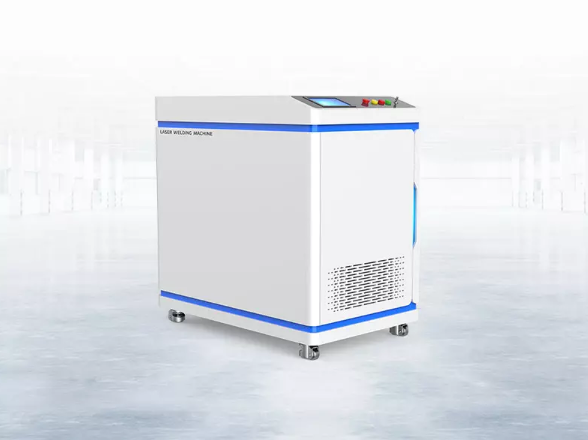
Laser welding machines offer many benefits, but they also come with some challenges and important considerations. Understanding these helps users choose the right equipment and avoid common problems.
One key challenge is welding high-carbon steels. These steels tend to crack during laser welding due to rapid cooling rates. The laser’s intense heat melts the metal quickly, but the fast cooling can cause brittle microstructures. This makes the weld prone to cracking and reduces strength.
To minimize cracking:
Preheat the steel before welding to slow cooling.
Use proper filler materials that match the steel’s properties.
Control laser power and speed to avoid overheating.
Consider post-weld heat treatment to relieve stresses.
Without these precautions, welds may fail under stress or fatigue.
Laser welding requires specialized machines and accessories. Unlike traditional welding, laser systems need:
High-quality laser sources (solid-state, gas, or fiber).
Precise beam delivery systems, often including fiber optics or mirrors.
Protective eyewear and safety enclosures to shield operators from harmful laser light.
Advanced cooling systems to prevent overheating of the laser and workpiece.
Automation components like robotics or CNC controls for accurate weld paths.
This specialized equipment demands skilled operators and maintenance personnel. Training is essential to ensure safe and effective use.
Laser welding machines can be costly upfront. The price depends on:
Laser type and power output.
Automation level and integration complexity.
Required safety systems and accessories.
Besides initial purchase costs, users should consider:
Operating costs, including electricity and consumables.
Maintenance and repair expenses.
Training and certification for operators.
However, the high precision, speed, and reduced rework can offset these costs over time, especially in high-volume or high-value production.
Laser welding technology continues to evolve rapidly, driven by industry demands for higher precision, faster production, and smarter integration. Several exciting trends are shaping the future of laser welding machines, enhancing their capabilities and expanding their applications.
One major area of progress is in how the laser beam is delivered to the workpiece. Traditional systems move the entire laser head or use rigid optics, which can limit speed and flexibility. New delivery methods focus on remote laser welding, using laser scanners to steer the beam rapidly along the weld seam without moving the heavy equipment.
Benefits include:
Higher welding speeds due to rapid beam movement.
Improved precision as scanners can direct the beam with micron-level accuracy.
Reduced mechanical wear since fewer moving parts are involved.
Ability to weld complex, curved, or hard-to-reach surfaces more easily.
Moreover, innovations in fiber optics and beam shaping allow for customized beam profiles, improving weld quality and penetration control. Adaptive optics can adjust the beam focus in real-time to compensate for surface irregularities or material changes.
Automation in laser welding is advancing beyond simple robotic arms. The integration of artificial intelligence (AI) and machine learning is enabling smarter, more autonomous welding systems.
Key developments:
AI-powered vision systems detect weld seams, defects, or misalignments in real-time.
Self-optimizing parameters adjust laser power, speed, and focus dynamically for consistent weld quality.
Predictive maintenance uses data analytics to foresee equipment issues before failures occur.
Collaborative robots (cobots) work alongside human operators, increasing flexibility and safety.
This integration reduces human error, increases throughput, and lowers costs. It also opens doors for more complex welding tasks previously considered too difficult or risky.
The rise of open source hardware and software is influencing laser welding technology, making it more accessible and customizable. Projects inspired by the RepRap movement have developed open source laser welding systems that users can modify and adapt.
Advantages include:
Lower entry costs for small manufacturers or research labs.
Flexibility to tailor systems for specific materials or applications.
Community-driven improvements accelerating innovation.
Easier integration with other open source manufacturing tools like CNC machines or 3D printers.
Such solutions democratize laser welding technology, encouraging experimentation and new use cases beyond traditional industries.
Laser welding machines, including solid-state, gas, and fiber types, offer precision, speed, and versatility for various industries. Their integration with automation and AI enhances production efficiency and quality. These machines significantly impact sectors like automotive, aerospace, and electronics by providing reliable and precise welding solutions. As technology advances, laser welding continues to evolve, offering even more innovative applications. Companies like Jinan Geou Technology provide cutting-edge laser welding solutions, ensuring high-quality and efficient production processes for their clients.
A: A laser welding machine is a device that uses focused laser beams to join materials, providing precise and efficient welding solutions for various industries.
A: A laser welding machine works by generating a focused laser beam that melts materials locally, creating a weld pool with minimal heat-affected zones.
A: Laser welding machines offer high precision, fast welding speeds, and versatility in material handling, making them ideal for complex industrial applications.
A: Laser welding machines come in solid-state, gas, and fiber types, each suited to specific material requirements and industrial needs.
A: The cost of a laser welding machine varies based on type, power output, and automation features, ranging from several thousand to hundreds of thousands of dollars.
